
The Complete Pallet Buying Guide
Selecting the right pallet is an important decision that affects transportation costs, warehouse efficiency, product protection, and overall supply chain performance. Choosing the wrong pallet can lead to damaged goods, higher logistics costs, and unnecessary operational challenges.
This guide explains the different types of pallets, their advantages, common applications, and the factors to consider before making a purchase. Whether you operate a warehouse, manufacturing facility, distribution center, or export business, understanding pallet options will help you make informed decisions.
HA-Paletten Service supplies a wide range of pallet solutions to businesses across Europe, helping customers select products that match their operational requirements.
Why Choosing the Right Pallet Matters
A pallet is more than just a platform for transporting goods. The correct pallet improves efficiency throughout the supply chain.
Benefits of selecting the right pallet include:
- Improved product protection
- Faster loading and unloading
- Better warehouse organization
- Lower transportation costs
- Increased workplace safety
- Longer pallet service life
- Better compatibility with warehouse equipment
- Pallet Buying Guide
A suitable pallet helps businesses reduce operational costs while improving productivity.
Types of Pallets
Several pallet types are available, each designed for different industries and applications.
EPAL Pallets
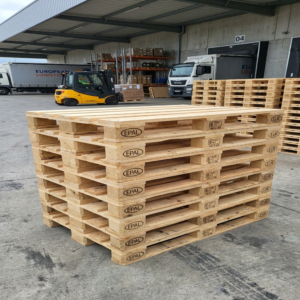
EPAL pallets are standardized wooden pallets widely used throughout Europe. Their consistent dimensions and quality make them suitable for transport, warehousing, and international logistics.
Ideal for:
- Manufacturing
- Distribution
- Warehousing
- Retail
- Export
- Pallet Buying Guide
Wooden Pallets
Wooden pallets are versatile, economical, and suitable for a wide variety of industries.
Advantages include:
- Affordable
- Easy to repair
- High load capacity
- Available in many sizes
- Suitable for export when heat-treated
- Pallet Buying Guide
Plastic Pallets
Plastic pallets are commonly used where hygiene, moisture resistance, and durability are priorities.
Advantages include:
- Easy to clean
- Moisture resistant
- Long service life
- Consistent dimensions
- Suitable for automated warehouses
Common industries:
- Food processing
- Pharmaceuticals
- Healthcare
- Chemical manufacturing
- Pallet Buying Guide
Comparing Wooden and Plastic Pallets
| Feature | Wooden Pallets | Plastic Pallets |
|---|---|---|
| Purchase Cost | Lower | Higher |
| Service Life | Long with repairs | Long with minimal maintenance |
| Repairs | Easy | Limited |
| Moisture Resistance | Moderate | Excellent |
| Hygiene | Good | Excellent |
| Export Use | Heat treatment may be required | Suitable for many export applications |
| Sustainability | Renewable and recyclable | Reusable and recyclable |
The best choice depends on your products, operating environment, and budget.
Standard Pallet Sizes
Using standard pallet sizes improves storage efficiency and transportation planning.
Common pallet dimensions include:
| Pallet Type | Typical Dimensions |
|---|---|
| EPAL Euro Pallet | 1200 × 800 mm |
| Industrial Pallet | 1200 × 1000 mm |
| Half Pallet | 800 × 600 mm |
| Custom Pallet | Customer specification |
Selecting the correct size helps maximize warehouse space and transport capacity.
Understanding Load Capacity
Before purchasing pallets, determine the weight of your products.
Important load ratings include:
Static Load
The maximum weight a pallet can support while stationary.
Dynamic Load
The maximum weight a pallet can safely carry while being moved.
Racking Load
The maximum weight a pallet can support when stored on warehouse racking systems.
Always ensure that pallet specifications match your operational requirements.
Choosing a Pallet Based on Your Industry
Manufacturing
Strong pallets capable of supporting heavy products and repeated handling.
Food and Beverage
Hygienic pallets that are easy to clean and resistant to contamination.
Pharmaceuticals
Plastic pallets with smooth surfaces and excellent hygiene characteristics.
Retail
Standard pallets suitable for distribution and warehouse operations.
Logistics
Standardized pallets compatible with forklifts, pallet trucks, and automated systems.
Agriculture
Durable pallets suitable for transporting produce, packaged goods, and agricultural products.
Export Considerations
Businesses exporting goods should consider:
- Destination country requirements
- Heat treatment (where applicable)
- ISPM 15 compliance for wooden pallets
- Weight limits
- Transportation method
- Warehouse handling
Planning ahead helps avoid unnecessary shipping delays.
Warehouse Storage Tips
Proper pallet management improves safety and extends pallet life.
Best practices include:
- Store pallets on flat surfaces
- Avoid overloading
- Inspect pallets regularly
- Keep storage areas organized
- Replace damaged pallets when necessary
- Train staff in safe handling procedures
Sustainability and Environmental Responsibility
Pallets play an important role in sustainable logistics.
Many businesses choose reusable pallets because they help reduce waste and improve operational efficiency.
Both wooden and plastic pallets can contribute to sustainable supply chains when properly maintained and recycled at the end of their service life.
Why Choose HA-Paletten Service?
HA-Paletten Service supplies reliable pallet solutions for businesses throughout Europe.
Our advantages include:
- EPAL pallets
- Wooden pallets
- Plastic pallets
- Bulk supply
- Custom pallet solutions
- Competitive pricing
- Reliable delivery
- Professional customer support
We work with customers across multiple industries to provide pallet solutions tailored to their operational needs. Pallet Buying Guide
Frequently Asked Questions
Which pallet is best for my business?
The ideal pallet depends on your products, handling equipment, storage conditions, and transportation requirements. Pallet Buying Guide
Are plastic pallets better than wooden pallets?
Both have advantages. Plastic pallets are ideal for hygienic environments, while wooden pallets remain a cost-effective option for many industries.
Can I order custom pallets?
Yes. Custom pallet solutions are available for businesses requiring specific dimensions or load capacities.
Which pallet is best for export?
Export requirements vary by destination. Wooden pallets may require heat treatment, while plastic pallets are often suitable for international shipping without this requirement. Pallet Buying Guide
Does HA-Paletten Service supply pallets across Europe?
Yes. We provide pallet solutions for customers throughout Europe, depending on product availability and logistics arrangements. Pallet Buying Guide
Request a Quote
Need help selecting the right pallet for your business?
Whether you require EPAL pallets, wooden pallets, plastic pallets, or custom pallet solutions, HA-Paletten Service is ready to assist.
Contact our team today to discuss your requirements and receive a tailored quotation.
Pallet Buying Guide
